
Whole House Generator Cost: 10 Things You Should Know Before Buying in Ottawa
- Rock Brisebois
- 23 hours ago
- 5 min read
If you live in Ottawa or Gatineau, you know the drill. Whether it’s a late-season ice storm, a summer derecho, or just a random grid failure, losing power isn't just an inconvenience anymore: it’s a disruption to your life and, in some cases, a threat to your home’s infrastructure. From frozen pipes to spoiled food and non-functioning sump pumps, the stakes are high.
Naturally, the first question most homeowners ask me is: "What is the whole house generator cost?"
At BHC Power, we believe in transparency. Buying a standby generator is a significant investment, much like buying a car or a new HVAC system. You aren't just buying a metal box; you’re buying peace of mind. To help you navigate this process, I’ve put together the 10 most critical things you need to know about costs, installation, and value before you pull the trigger.
1. The Total Investment Range
Let’s get the big number out of the way first. In 2026, for a high-quality, professionally installed whole house standby generator in the Ottawa and Gatineau area, most homeowners should budget between $10,000 and $20,000.
Why such a wide range? Because every home is different. A small bungalow with a natural gas line right next to the electrical meter will cost significantly less than a large rural estate in Gatineau that requires a 100-foot propane line and a complex sub-panel setup.
2. The "Unit vs. Installation" Split
It is a common mistake to look at the price tag at a big-box store and assume that’s the final cost. In reality, the whole house generator cost is usually split 50/50 between the hardware and the labor.
The Unit: Typically costs between $5,000 and $10,000 depending on the brand (like Generac or Kohler) and the kilowatt (kW) output.
The Installation & Setup: This covers the specialized electrical work, gas fitting, site preparation, and municipal permits. Professional generator installation in Ottawa usually runs between $3,500 and $7,000.
3. Sizing Your Generator Correctly
You don't want to pay for power you don't need, but you definitely don't want your generator to stall when the AC kicks on.
14kW to 18kW: Ideal for average-sized homes. This will run your lights, fridge, furnace, and a few high-draw items like a well pump or a microwave.
22kW to 26kW: This is the "sweet spot" for most modern Ottawa homes. It allows you to run central air conditioning and electric ranges without thinking twice.
30kW+: Usually reserved for very large properties or commercial applications.
4. The Role of the Automatic Transfer Switch (ATS)
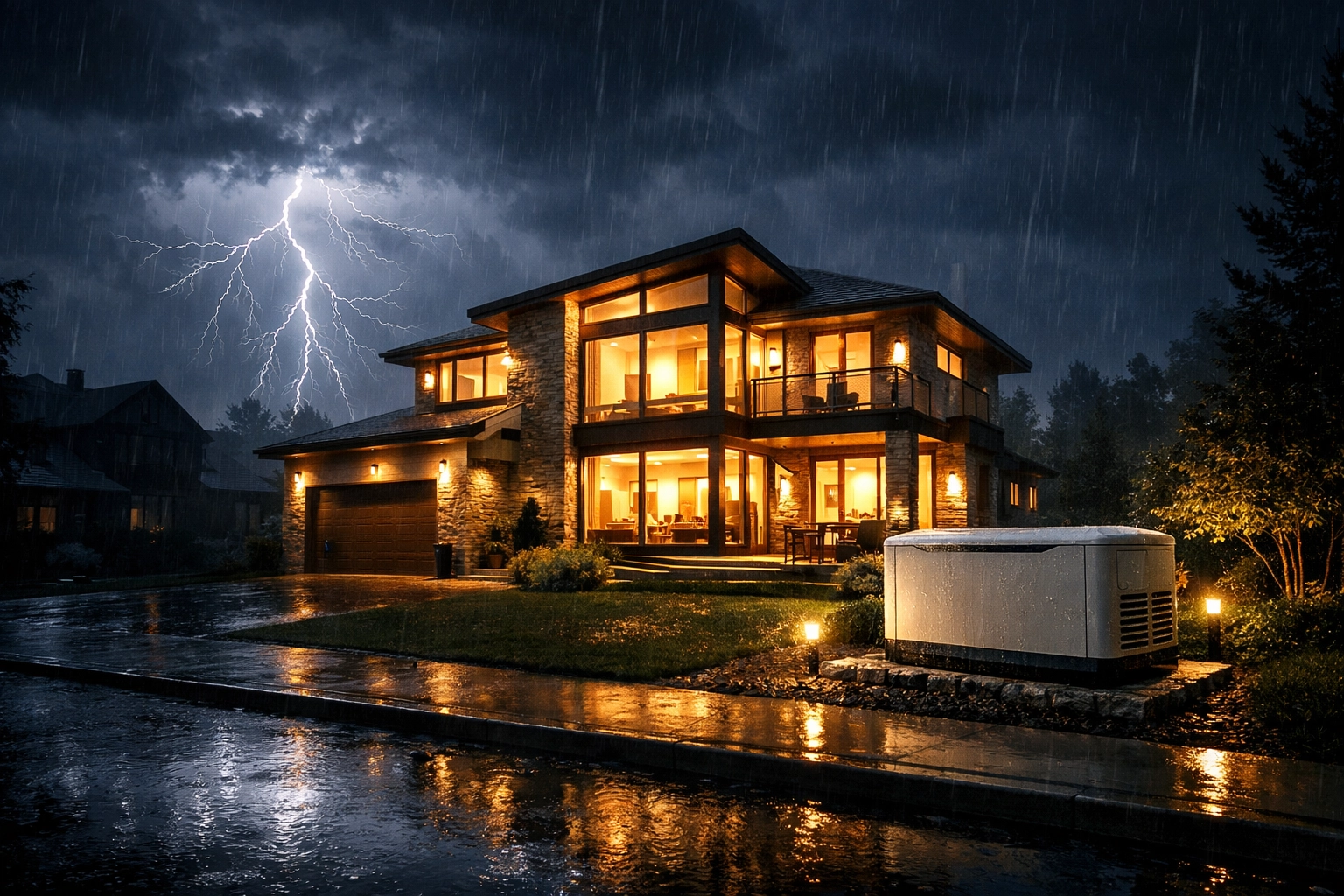
The "Whole House" part of the name comes from the Automatic Transfer Switch. This is the brain of the operation. It senses when the utility power drops and tells the generator to start. Within 10 to 20 seconds, your power is back on. An ATS can cost anywhere from $800 to $2,000. While manual switches are cheaper, they require you to go outside in the dark and rain to flip a lever: which most of our clients prefer to avoid.
5. Natural Gas vs. Propane Costs
In Ottawa, we are lucky to have extensive natural gas infrastructure. If you have a gas meter, your fuel cost is relatively low and the supply is "infinite." However, if you are in a rural area like Dunrobin or parts of Gatineau, you likely rely on propane.
Natural Gas: Low operating cost, but requires a licensed gas fitter to run a high-pressure line to the unit.
Propane: Requires a large tank (usually 500+ gallons) on your property. The cost of the tank and the fuel delivery adds to your long-term operating budget.
6. Permitting and ESA Inspections
Don't let a "handyman" tell you that permits aren't necessary. In Ontario, all standby generators in Gatineau and Ottawa must be inspected by the Electrical Safety Authority (ESA).
Safety: Ensures the system won't "backfeed" into the grid, which could be fatal for utility workers.
Insurance: If you have an unpermitted installation and a fire occurs, your insurance company may deny your claim. Expect to see $200 to $500 in your quote for permits and inspection fees.
7. Site Preparation and Distance
Where the generator sits matters. For the best price, you want the generator placed close to both your electrical meter and your gas meter.
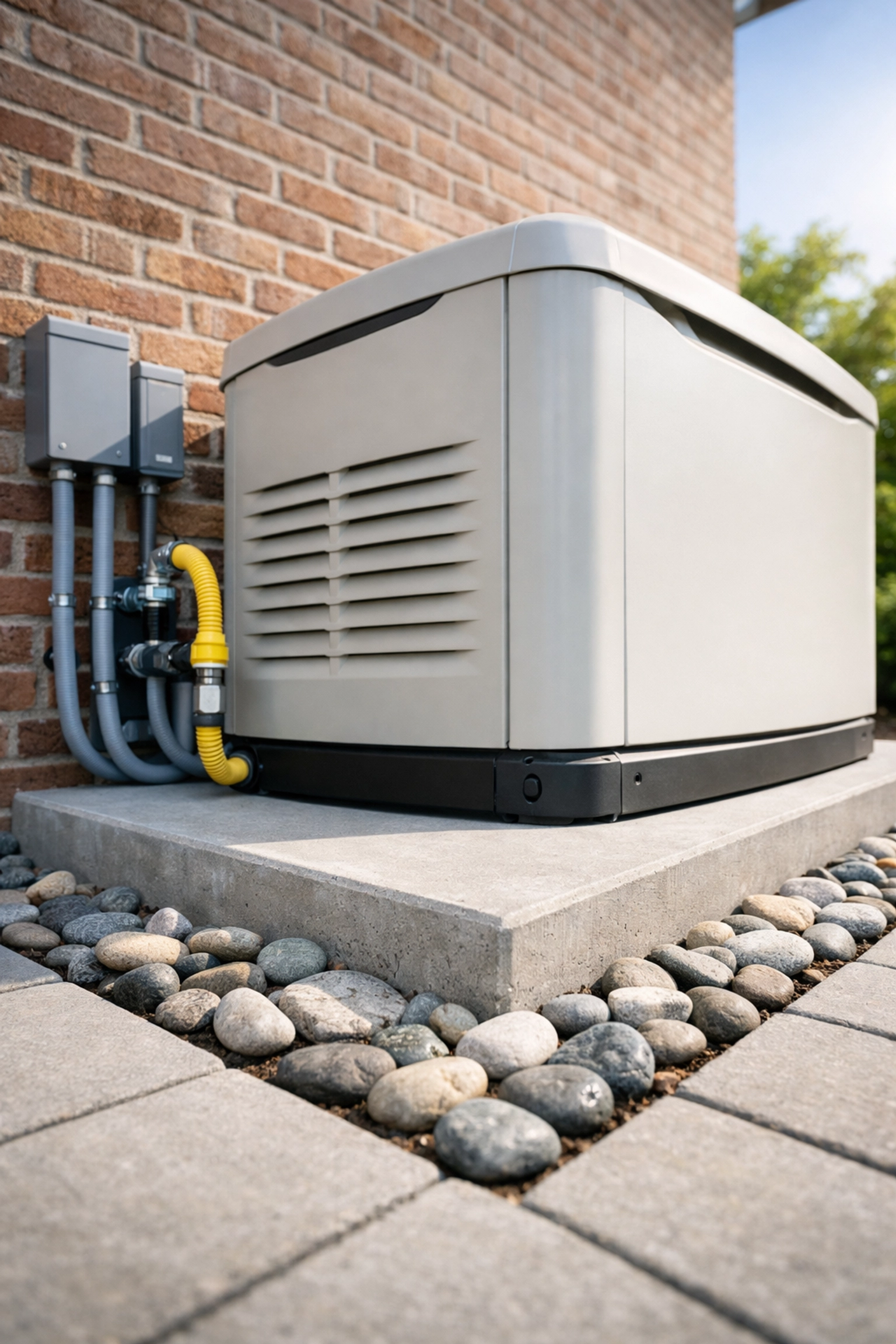
The Pad: The unit needs to sit on a level, stable surface (usually a pre-cast concrete pad or a gravel bed).
The "Distance Penalty": For every foot of copper wire and gas piping we have to run, the price goes up. If the generator is 50 feet away from your panel, the material costs for heavy-gauge wire can add hundreds to your bill.
8. Brand Selection: Generac vs. Kohler
At BHC Power, we carry the industry leaders.
Generac: The most popular choice in North America with an excellent parts network. They offer a great balance of technology and value.
Kohler: Known for heavy-duty commercial-grade components. They often feature higher-quality enclosures and slightly better power quality for sensitive electronics. The price difference between the two is usually within 5-10%, but we help you choose based on your specific home requirements. You can see more details on our Generac and Kohler pages.
9. Ongoing Maintenance: The "Hidden" Cost
A generator is an engine. Just like your car, it needs oil changes, spark plugs, and battery checks. If you ignore maintenance, the generator might not start when you actually need it. We highly recommend our Shield Generator Protection Plans.
Annual Maintenance Cost: Expect around $300 for a professional annual service.
Remote Monitoring: For a small monthly fee, we can monitor your generator 24/7. If there is a fault code, we often know about it before you do. Check out our monitoring services for more info.
10. Long-Term Value and ROI
While the upfront whole house generator cost is significant, it’s important to look at the Return on Investment (ROI).
Home Value: Real estate data shows that a standby generator can increase a home’s resale value by up to 5%, often recouping much of the initial cost.
Prevention: One major power outage that causes your basement to flood can easily cost $20,000+ in damages. The generator pays for itself the very first time the lights go out.

Why Choose BHC Power?
We don’t do "cookie-cutter" installations. Every home in the Ottawa Valley has unique challenges, from heritage home wiring to specific municipal bylaws. At BHC Power, we provide custom-tailored solutions that ensure your system is sized perfectly and installed to the highest safety standards.
We are a local team that understands the Ottawa climate. We know exactly what a -30°C night feels like, and we know exactly what it takes to make sure your generator starts in those conditions.
Ready to protect your home?
Don’t wait for the next storm warning to start thinking about your backup power. Let’s get you a quote that makes sense for your budget and your home.
Get in touch with us today:
Visit our website:www.bhcpower.com
Book an On-Site Assessment:Book Online Here
Contact Us Directly:Click here to send a message
BHC Power – Your Local Experts in Reliable Backup Energy.
Comments