
The $100 Refill: How Soaring Oil Prices Make Standby Generators the Smarter Choice
- Rock Brisebois
- 30 minutes ago
- 5 min read
The world has changed rapidly over the last few years, and the energy landscape in Canada is no exception. For homeowners in Ottawa and Gatineau, the traditional "safety net" for power outages has long been the portable gasoline generator. It was the affordable, go-to solution for keeping the fridge running and the lights on when the grid failed.
But we aren’t living in the same economy we were five years ago.
With soaring oil prices driven by global crises and supply chain instability, the math behind portable power has fundamentally shifted. What used to be a minor inconvenience is now an expensive, stressful, and often unreliable chore. At BHC Power, we’ve seen the shift firsthand. Homeowners are tired of the "gasoline run." They are tired of the rising costs. They are looking for a more permanent, professional solution.
If you are still relying on a row of red plastic gas cans to keep your family safe, it’s time to take a hard look at why the $100 refill is making your portable generator a liability.
The Financial Reality: Why Portable Generators are Bleeding Your Wallet
When you buy a portable generator, you’re often looking at the upfront price tag. It looks like a bargain compared to a permanent standby system. However, the hidden cost of operation in today’s economy is staggering.
Portable generators are notorious fuel-hogs. Most mid-sized units require several gallons of gasoline just to run for 8 to 10 hours at half-load. In the middle of a prolonged Ottawa winter blackout, where you might be running that unit for days on end, you aren't just buying a few liters of gas: you are buying a small fortune.
The $100 Refill is no longer a hyperbole; it is the new baseline.
As oil prices continue to shoot through the roof, the cost of keeping that portable unit humming can easily exceed $100 per day. When you factor in the current price per liter at the pump, you are paying a premium for a temporary solution. In contrast, a standby generator from brands like Generac, Briggs & Stratton, or Champion runs on your home’s existing natural gas or propane supply. These fuels are not only cleaner and more efficient, but they are also far more cost-effective during a crisis.

The Gas Station Paradox: When the Pumps Stop Working
There is a major flaw in the "portable generator" plan that many homeowners realize far too late: Gas stations require electricity to pump gas.
It’s a simple fact of infrastructure. When a major storm hits the Ottawa-Gatineau region and the grid goes down, it isn't just your house that loses power. The local gas station down the street is often in the same boat. If they don't have their own massive industrial backup system, those pumps aren't moving a drop of fuel.
Imagine the scenario:
Your power goes out.
You pull your portable generator out of the garage.
You realize you only have half a tank left.
You drive to the nearest station, only to find the "Closed" sign up or the pumps dead.
This is the Gas Station Paradox. You need gas because the power is out, but you can’t get gas because the power is out. By investing in a standby unit through BHC Power, you bypass this entire failure point. A standby generator is connected directly to your home’s fuel lines. Whether it’s natural gas or a large on-site propane tank, the fuel is already there, waiting to be used the second the sensors detect a drop in grid voltage.
The Frustration of the Line
Even if the gas station has power, a widespread outage creates a secondary crisis: the panic. We’ve all seen it. The moment the sky turns dark and the news reports a multi-day outage, the queues at the pumps stretch around the block.
Wait Times: You can spend hours sitting in idling traffic just to reach the pump.
Fuel Limits: During crises, stations often impose limits (e.g., "Only 20 liters per customer"), which isn't even enough to get a large portable unit through the night.
The Physical Toll: Lugging 40lb fuel cans through snow or rain, trying to pour them into a hot generator without spilling (a major fire hazard), and doing it all in the dark is not anyone’s idea of a "solution."
Standby generators eliminate the "human element" of power restoration. There are no lines, no heavy lifting, and no midnight runs to the station. You stay inside where it’s warm, while your Briggs & Stratton unit handles the heavy lifting automatically.

The "King of the Block" Confidence
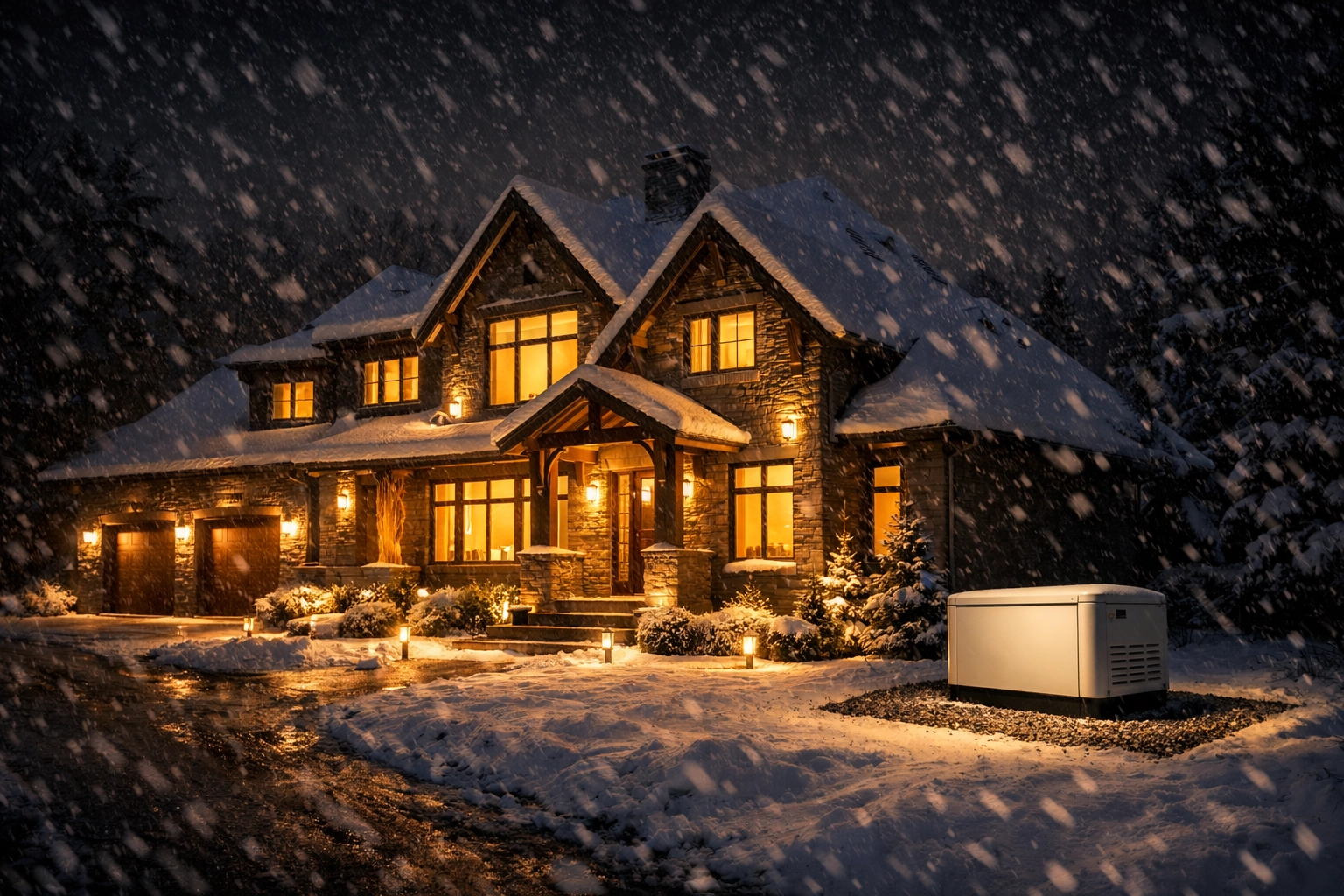
At BHC Power, we talk a lot about being the "King of the Block." It’s a specific feeling of security. While your neighbors are outside in the freezing rain, wrestling with pull-cords and hunting for fuel, your home stays fully illuminated.
Your HVAC system continues to keep your family warm. Your security system remains active. Your refrigerator and freezer stay cold, saving you hundreds of dollars in spoiled food: a cost often overlooked when calculating the "savings" of a portable unit.
A home standby generator is a statement that you are prepared for the modern world. You aren't at the mercy of global oil prices or local infrastructure failures. You have taken control of your own energy security.
Long-Term Investment vs. Short-Term Expense
It is easy to get caught up in the immediate crisis, but smart homeowners look at the long-term ROI. A portable generator is a depreciating asset that costs more to run every single year as fuel prices climb. A professionally installed standby generator is an investment in your property.
Increased Property Value: Real estate data shows that standby generators can increase a home’s value by 3% to 5%. In the competitive Ottawa market, this is a significant advantage.
ROI: With an average ROI of 50% to 75%, the system practically pays for itself over its 20-year lifespan when you consider the avoided costs of food spoilage, hotel stays during outages, and the sheer price of gasoline.
Durability: While portables are built for occasional use, units from Generac and Champion are engineered for long-term reliability and monitoring.
Why BHC Power?
Choosing the right generator is only half the battle. The installation requires precision, expertise, and a deep understanding of local electrical codes. BHC Power specializes in residential standby solutions and commercial backup systems throughout Ontario and Quebec.
We don't just "sell" you a box. We provide a full-service experience:
Site Assessment: We determine the exact load requirements for your home.
Permitting & Compliance: We handle the red tape so you don't have to.
Professional Installation: Our team ensures your unit is placed perfectly and connected safely to your fuel source and electrical panel.
Ongoing Support: We are here for the long haul to ensure your investment stays ready for the next storm.
Don't Wait Until the Next Crisis Hits
The price of oil isn't showing signs of a permanent "rollback" to 2010 levels. Global instability means the "energy crisis" is a recurring theme rather than a one-time event. If you are still relying on a gasoline-powered portable unit, you are tethered to the pump and the whim of the oil market.
Break free from the $100 refill. Give your family the security of a permanent standby system that activates in seconds, regardless of whether the gas station down the street has power or not.
Ready to upgrade your home’s defense?
Don’t wait for the next blackout to realize your portable generator isn't enough. Secure your peace of mind today with the experts at BHC Power.
Book a Quote:Click here to schedule your free assessment
Call Us Directly: Speak with a specialist to find the right Generac, Briggs & Stratton, or Champion unit for your needs.
Visit Us Online: Learn more about our home backup solutions.
Be the neighbor who has the lights on. Be the "King of the Block." Choose BHC Power.
Comments