
Is Backfeeding Your House Bad? The Truth About ESA-Approved Transfer Switches and Ottawa Safety
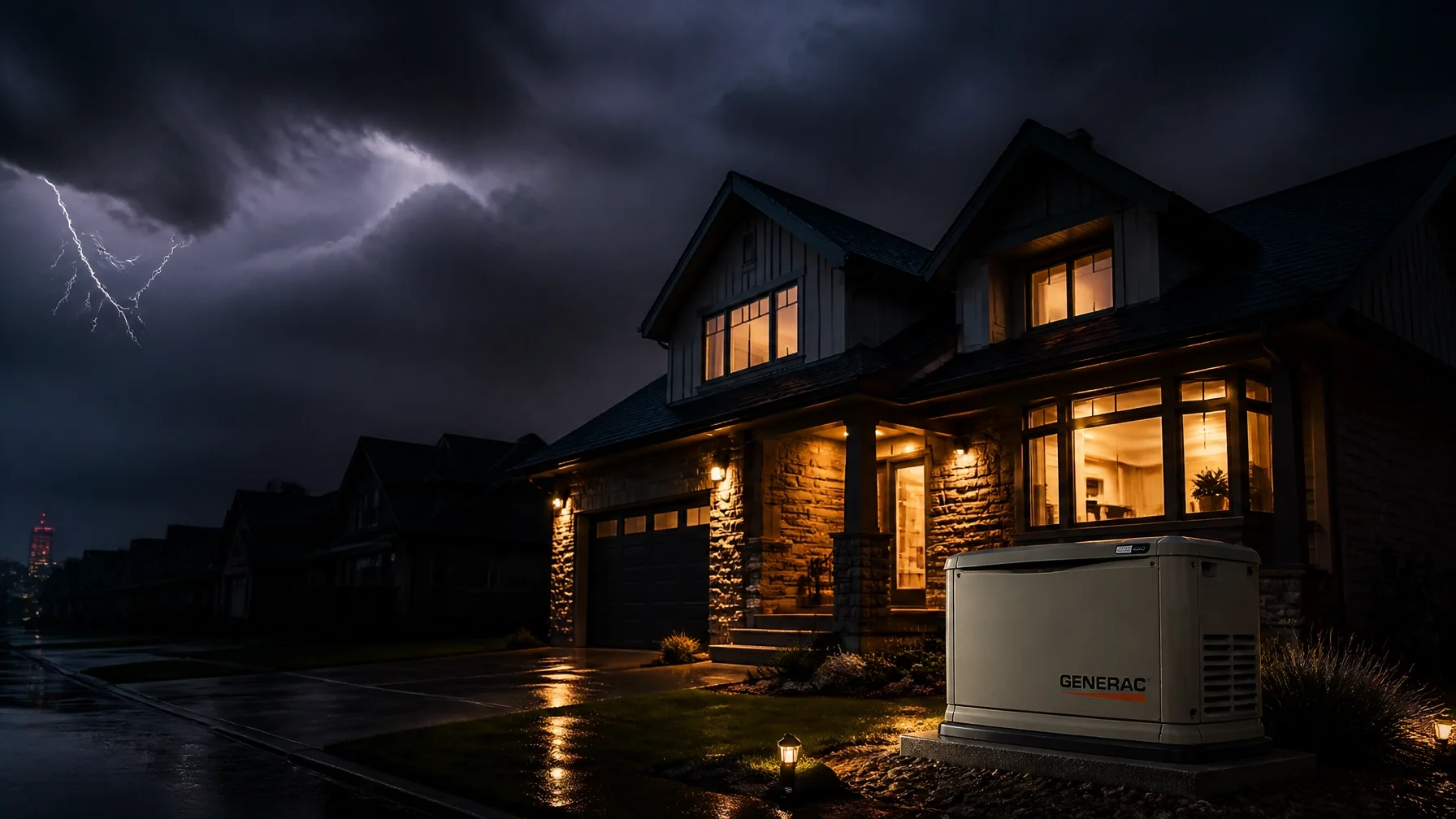
Picture this: It’s a humid July evening in Ottawa. You’ve just fired up the barbecue when the sky turns an angry shade of bruised purple. Ten minutes later, the wind is howling, the trees are dancing a little too vigorously, and, snap, the lights go out.
The silence is heavy. You look out the window, and your entire Gatineau neighborhood is pitch black. You have a portable generator in the garage, and you’re tempted to pull off that "trick" you saw on a questionable YouTube forum: the infamous "suicide cord." You think, “If I just plug the generator into this dryer outlet, I can power the whole house, right?”
Stop right there.
Before you even touch that male-to-male plug, let’s have a heart-to-heart. At BHC Power, we’ve seen some "creative" electrical work in our time, but backfeeding is the one thing that truly keeps us up at night. It’s not just a bad idea; it’s illegal, deadly, and a surefire way to turn a temporary blackout into a permanent tragedy.
In this guide, we’re breaking down the science of why backfeeding is a disaster waiting to happen and why an ESA-approved transfer switch is the only way to keep your family and our local utility workers safe.
What Exactly Is "Backfeeding," and Why Is It So Tempting?
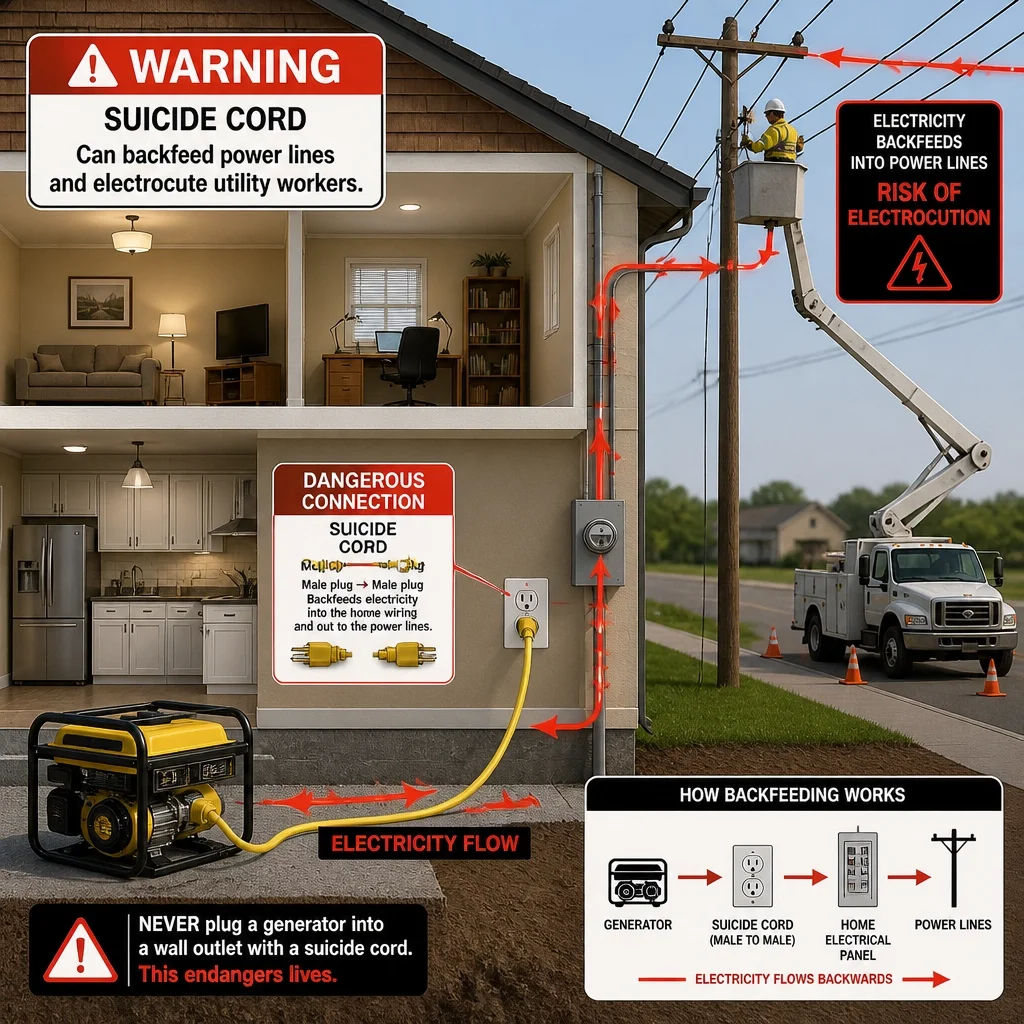
In simple terms, backfeeding is the practice of feeding electricity from a generator back into your home’s electrical system in reverse. Instead of power coming from the grid into your panel, you’re pushing power from a generator into a wall outlet or directly into the panel without isolating your house from the street.
Why do people do it? Usually, it's because they want the convenience of a standby generator without the "hassle" (read: safety) of a professional generator installation in Ottawa. They want to power their fridge, their AC, and their lights without running five different extension cords through a cracked window.
While the DIY "suicide cord" (a double-ended male plug) might seem like a clever hack, it is effectively an unexploded ordinance in your living room.
The Three Deadly Dangers of Backfeeding
When you backfeed your home, the electricity doesn't just stay in your house. It follows the path of least resistance.
1. You Could Kill a Lineworker
This is the most critical reason backfeeding is illegal. When you backfeed your house, your generator sends power out through your meter and back onto the neighborhood power lines. Your 120V or 240V generator output goes through the transformer on the pole in reverse, which steps it up to thousands of volts.
Utility workers from Hydro Ottawa or Hydro-Québec often work on lines they assume are "dead" during an outage. If your generator is backfeeding the grid, that "dead" line suddenly becomes live. You could unknowingly electrocute the person trying to restore your neighborhood's power. It’s a heavy burden to carry just to keep your beer cold.
2. The "Restoration Collision" (Fire Hazard)
What happens when the utility company finally fixes the problem and the grid power comes back on while your generator is still backfeeding? Two massive power sources, your generator and the entire electrical grid, will collide in your panel.
This usually ends in a spectacular (and expensive) fashion:
Your generator could literally explode or catch fire.
Your home’s electrical panel could melt.
Sensitive electronics like your TV, computer, and fridge will likely be fried instantly.
3. The Suicide Cord Itself
There’s a reason it’s called a suicide cord. Having a cord with two male ends means that as soon as one end is plugged into a running generator, the other end has exposed live prongs. If a child, a pet, or even you accidentally touch those prongs, the result is an immediate, high-voltage shock.
The Legal Reality: ESA and the Ontario Electrical Safety Code
If the threat of accidental manslaughter isn't enough to deter you, perhaps the legal and financial consequences will. In Ontario, the Electrical Safety Authority (ESA) is very clear: backfeeding is a violation of the Ontario Electrical Safety Code.
If you are caught backfeeding or if an unpermitted generator installation causes a fire:
Insurance Denial: Your homeowner’s insurance company will likely deny any claim related to a fire or equipment damage if they find an illegal, unpermitted electrical hookup.
Fines: The ESA can issue significant fines for non-compliant electrical work.
Liability: You are legally liable for any injuries to utility workers or neighbors caused by your backfeeding.
Whether you're looking for a standby generator or a portable setup, the only way to stay compliant is through a professional installation that includes a certified transfer switch.
The Hero of the Story: The ESA-Approved Transfer Switch
So, how do you get the convenience of whole-home power without the risk of an accidental house fire? You install a Transfer Switch.
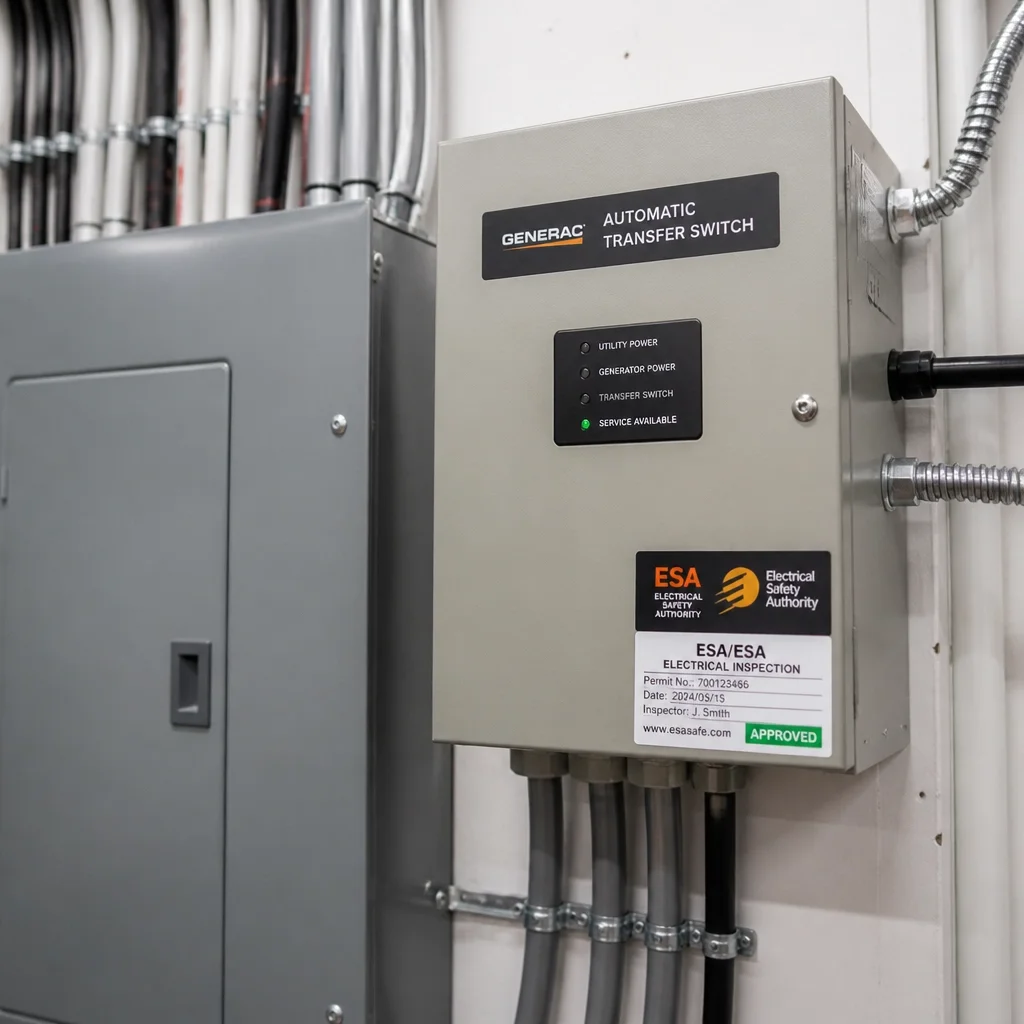
A transfer switch is a clever device that acts as a gatekeeper for your home’s electricity. It ensures that your home can be connected to either the utility grid or your generator, but never both at the same time.
Manual vs. Automatic Transfer Switches
Depending on your needs and budget, there are two main types of switches we install at BHC Power:
Manual Transfer Switches: Often used with portable generators (like those from Champion or Briggs & Stratton). You manually flip the switch from "Line" to "Generator" when the power goes out. It’s reliable, safe, and keeps you on the right side of the law.
Automatic Transfer Switches (ATS): These are the gold standard for standby generator systems like those from Generac. The moment the power dips, the ATS detects the failure, starts the generator, and flips the power source over automatically. You don’t even have to leave your couch.
Why Professional Installation in Ottawa and Gatineau Matters
The Ottawa-Gatineau region is famous for its "weather whiplash." We go from freezing rain to blistering heat waves in the blink of an eye. This puts a massive strain on our local grid, making a backup power solution almost a necessity.
However, a generator is only as good as its installation. At BHC Power, we don't just "hook it up." We provide:
Custom-Tailored Solutions: We assess your specific power needs to ensure you aren't over-investing or under-powering. Whether it's a massive estate or a cozy bungalow, we have the right fit.
Certified Technicians: Our team knows the ins and outs of both Ontario (ESA) and Quebec (RBQ) regulations. We handle the permits and the inspections so you don't have to.
Brand Expertise: We specialize in the industry's most reliable brands, including Generac, Briggs & Stratton, and Champion. (And no, we won't try to sell you a Kohler: we stick to what we know works best for our local climate).
Ongoing Support: From 24/7 monitoring with MobileLink technology to comprehensive maintenance packages, we make sure your generator is ready when the grid isn't.
Investing in Peace of Mind
At the end of the day, a generator is about security. It’s about knowing that when the next big storm hits the Ottawa Valley, your sump pump will keep running, your food won't spoil, and your family will be safe and warm.
Cutting corners with backfeeding might save you a few hundred dollars today, but it could cost you your home: or someone else’s life: tomorrow. A proper generator installation in Ottawa is an investment in your property's value and your family's safety.
Don’t Wait for the Next Blackout
Power outages don't wait for a convenient time. They happen during the big game, in the middle of a blizzard, or right as you're sitting down for a family dinner.
Is your home truly ready?
If you have questions about transfer switches, standby generators, or if you need a repair for your existing system, give us a call. Let’s make sure your home is a fortress of reliability, not a safety hazard.
Contact BHC Power Today:
Phone: (613) 733-8135
Website: bhcpower.com
Service Areas: Ottawa, Gatineau, and the surrounding areas.
Stop worrying about the grid. Take control of your power( the safe way.)
